7 Claude Hacks to Grow Your Shopify Store
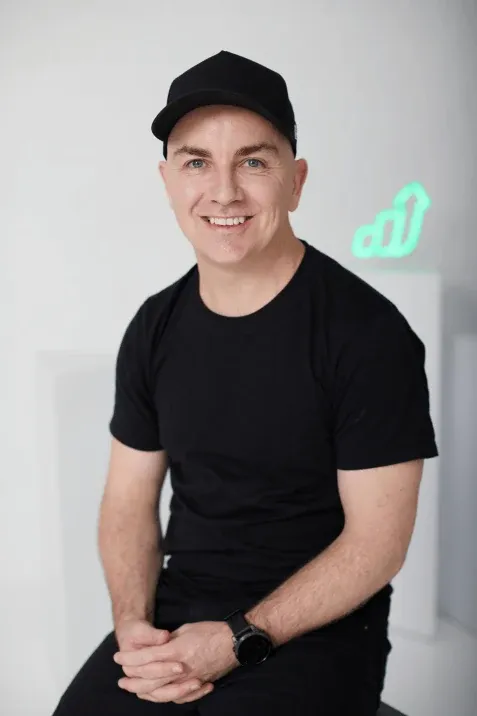 By Brendan Gillen, Founder & AI Specialist
Published · Updated · 5 min read
In short
Most Shopify owners use Claude like a search bar, so its output sounds average. These 7 hacks feed it your real data and connect it to your tools. They run from mining customer emails to a weekly conversion optimiser, a morning brief and AI win-back campaigns.
Watch the video version of this guide on YouTube (opens in a new tab).
The best Claude hacks for a Shopify store all do the same thing: they stop you using Claude like a search bar and give it your real data and your real systems. Mine your customer feedback, build one business brain every AI can read, connect Claude to your tools, run a weekly conversion optimiser, hand over the grunt work, get a morning brief, and let Claude find customers ready to buy again. Do that and Claude starts working for you, instead of you working for it.
This is the written version of the video above, published in November 2026. I've spent 15 years scaling Shopify stores, and my coffee brand Dosed sells globally with one and a half humans. These are the seven hacks we use every week.
Hack 1: How do you mine the voice of the customer with Claude?
Most store owners paste in a product, type "write me a description" and wonder why it reads like every other store. The fix starts with your own data, because your customers have already told you what to say.
- Load your customer emails. We downloaded over 5,000 customer service emails into Claude.
- Ask for the patterns. What do people ask most often? What problems do they hit? Why do they return the product? What stops them buying?
- Get a report. Have Claude summarise it all in one document.
- Check your website against it. Are you answering those questions, busting those objections and solving those problems? Where you aren't, have Claude change the site.
Then add every social media comment and every product review. What people say when it isn't going to an official inbox is often the most powerful material you have. Finally, do the same with your competitors' reviews and comments. The result is a file full of gold: you answer customers' questions before they ask them.
Hack 2: What is a business brain, and why do you need one?
If you jump between ChatGPT, Claude and Grok, each one starts from scratch and loses everything you taught the last one. A business brain fixes that.
Put everything in one place: the customer insights from hack 1, plus your colour palettes, logos, wording, tone of voice, product data and returns policy. Host it in the cloud, then point every AI tool at it. Whichever AI you use, it reads the same brain and gives answers that match your business. The brain gets smarter over time as research, customer data and your team's knowledge go into it.
Hack 3: How do connectors turn Claude into an assistant that acts?
A brain that can't touch your systems is just a document. Connectors, built on MCP, are what let Claude reach out and act. In Claude you'll find them under connectors or plugins. You can connect Shopify, your email, Klaviyo, your ad accounts, your project management tool, your warehouse system and almost anything else.
With connectors in place, Claude can draft and send customer emails, edit products in Shopify, or pull product data into a spreadsheet, send it to a supplier and place an order. We use 20 to 30 connectors on our Claude account every month. If you are starting out, begin with the Shopify AI Toolkit setup for Claude.
Hack 4: How does a weekly optimiser improve your conversion rate?
This is where the brain and the connectors work together:
- Connect Claude to Shopify, so it can see your analytics.
- Connect it to Microsoft Clarity, so it can watch how people use your store.
- Let it run for a week. At the end, it reports the changes that should lift your conversion rate.
- Make the changes with Claude Code, then tell the optimiser they are done.
- The next week it checks whether each change worked. If it did, you get the next improvement. If not, you get a different one.
It also watches traffic sources and how much people spend per order, so a change that lifts conversion rate doesn't quietly hurt the business. Running this check has almost doubled our conversion rate over the last eight weeks.
Hack 5: Which jobs should you hand to AI first?
Most people ask AI to do the things they don't know how to do: "fix my ad account" or "make me more money". The problem is they can't check whether the answer is right, and it can make the business worse.
Do the opposite. Give AI the jobs you already know how to do, so you can tell when it gets them right. Two examples from our store:
- Product reviews: Claude checks new reviews every day, approves them and replies. That's 20 to 30 minutes a day saved.
- Email triage: it answers the standard questions, like "Where's my order?" and "How long does shipping take?" That's another 20 to 30 minutes.
Two simple jobs give back an hour a day, or seven hours a week. Use that time to learn the harder skills, or to be away from the computer. Here is the customer service inbox setup we use.
Hack 6: What does a morning brief tell you?
I used to open my emails each morning and wonder what to do first. The morning brief answers that. Because it already has your brain and your connectors, it summarises the last 24 hours, compares them with the last week and month, and flags problems: ad accounts spiralling, conversion dropping, stock running out, or customers getting upset.
It gives me three action items every morning. I do them, or hand them to AI, and then get on with my day. It runs on a schedule and pings me at 8:00 am. You can set up the same thing with our free Claude morning brief for Shopify.
Hack 7: How can Claude win back customers who stopped buying?
Before AI, finding past customers likely to buy again meant hours building segments in Klaviyo. Now Claude does it:
- Connect Claude to Klaviyo.
- Have it study your purchase history, email opens and segments to find people likely to buy again with a nudge.
- Group them into buckets by the likely reason they haven't bought.
- Create a campaign for each bucket, with an incentive that fits the reason.
It works because the message is specific. Not "We miss you", but "Hey Jim, the decaf you like is back in stock. Want one bottle or two? We'll ship it free." Claude saw that Jim added decaf to his cart, reached checkout and left, so free shipping is the nudge. Doing that by hand for every bucket would take hours.
Try these seven hacks over the next 90 days and you'll make more money, save time and understand your business better. If you want a team to install them in your store with you, look at the Elite Team.